
SIM Chip — Embedded MFF2 SIM for Single-Operator IoT Deployments
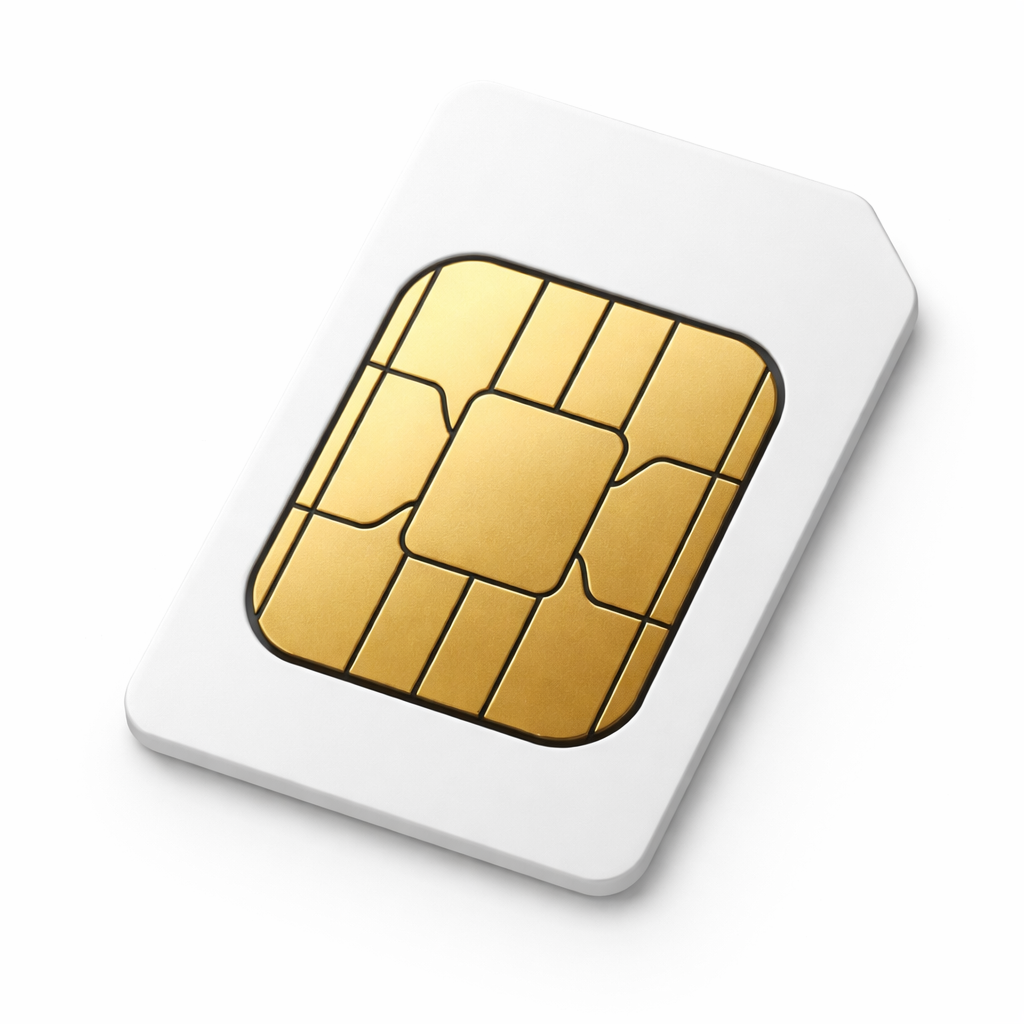
ISIMConnect’s SIM Chip is an MFF2 form factor SIM — vacuum-sealed and solderable directly to a device’s circuit board — pre-personalised with a single operator profile for Airtel, Vodafone, Jio, or BSNL. It is functionally identical to a standard SIM card from a network perspective, but its embedded form factor makes it suited for compact devices, outdoor hardware, high-vibration environments, or any deployment where a removable SIM slot is impractical or a security liability. Available with operator choice for any M2M or IoT application, with SIM personalisation performed at SAS-accredited sites under GSMA security protocols.
What Is an MFF2 SIM Chip?
MFF2 (Machine Form Factor 2) is the industrial-grade SIM packaging standard defined by ETSI (TS 102 671) for IoT and M2M applications. Unlike a standard SIM card that sits in a removable plastic carrier, an MFF2 chip is:
Soldered directly to the PCB during device manufacturing — no SIM slot or connector required
Vacuum-sealed against moisture, dust, and corrosion — suitable for outdoor, marine, and industrial environments
Vibration-resistant — no removable connector to loosen under constant motion, critical for vehicle-mounted or machinery-embedded hardware
Tamper-resistant — permanently installed and cannot be physically removed from the device
Long-lifecycle — rated for extended temperature ranges and operational lifespans beyond standard removable SIM form factors
From the network’s perspective, an MFF2 SIM Chip authenticates and connects identically to a standard UICC SIM card — the form factor change is purely mechanical, not functional.
How the SIM Chip Works
The SIM mobile authentication process happens automatically whenever a device powers on.
Step-by-Step Process
You turn on your smartphone, modem, or IoT device.
The SIM chip sends your IMSI information to the phone network.
The operator securely authenticates the SIM using encrypted security keys.
Once verified, the device gains access to calls, SMS, and mobile data services.
This secure process allows a connect network function while preventing unauthorized access.
A mobile chip inside a SIM card ensures safe communication between your device and the operator network.
Who Should Choose SIM Chip
SIM Chip is the right choice when:
Your deployment operates within a single, consistent operator footprint (Airtel, Vodafone, Jio, or BSNL)
Your device hardware does not accommodate a removable SIM slot, or you want to eliminate the SIM slot for cost, reliability, or security reasons
Your deployment environment is outdoor, industrial, or high-vibration where removable SIM connectors are a reliability risk
You do not need to change operator profiles after the device leaves the factory
You need long-term, maintenance-free embedded connectivity with the lowest possible deployment complexity
If you need multi-network automatic switching, choose Multi-IMSI eSIM. If you need to change or manage operator profiles remotely after deployment, choose SGP.32 eSIM.
Specifications
Form factor – MFF2 (ETSI TS 102 671), surface-mount solderable
UICC type – Standard UICC (not eUICC)
Operator profiles – Single pre-loaded operator profile
Supported operators – Airtel, Jio, Vodafone Idea, BSNL
Profile updates post-deployment – Not supported — fixed at personalisation
Environmental rating – Industrial-grade — vacuum-sealed, vibration and corrosion resistant
Tamper resistance – High — permanently soldered, cannot be removed
Personalisation – SAS-accredited sites, GSMA security protocol norms
Network generation – 2G / 3G / 4G LTE / LTE-M / NB-IoT
Common Use Cases
GPS trackers and vehicle telematics in single-operator regions
Industrial automation and factory floor sensors in controlled environments
Smart meters and utility monitoring within a single carrier’s network coverage
CCTV and surveillance systems in fixed locations
Wearables and compact consumer IoT devices without removable SIM slots
Asset tracking in logistics where one carrier provides consistent national coverage
Agricultural IoT — soil sensors, weather stations, irrigation monitors in rural areas
Key Benefits
Eliminates SIM slot — reduces device BOM cost and manufacturing complexity
Industrial environmental sealing — operates in conditions where removable SIMs fail
Tamper-proof — the SIM cannot be removed from a deployed device, reducing fraud and misuse risk
SAS-accredited SIM personalisation — operator credentials loaded under GSMA security standards
Lowest operational complexity of all ISIMConnect’s embedded SIM products — no eIM, no switching applet, no infrastructure
Available with Airtel, Jio, Vodafone, or BSNL for Indian deployments
Frequently Asked Questions
Q: What is the difference between a SIM Chip and a regular SIM card?
A: A SIM Chip uses the MFF2 form factor — it is vacuum-sealed and soldered directly to the device’s circuit board rather than inserted into a removable SIM slot. It functions identically to a standard SIM card from the network’s perspective: same authentication, same profile structure, same connectivity. The difference is purely physical — the MFF2 packaging is more rugged, tamper-resistant, and compact than a removable SIM card.
Q: What is the difference between SIM Chip and SGP.32 eSIM — they both look like chips?
A: Both use the MFF2 physical form factor but are fundamentally different products. SIM Chip is a standard UICC chip with a single pre-loaded operator profile that cannot be changed after manufacture. SGP.32 eSIM is an eUICC chip that supports GSMA SGP.32 remote provisioning — operator profiles can be downloaded, activated, and switched over the air after the device is deployed. If you need to change operators post-deployment, you need SGP.32 eSIM. If you need fixed, single-operator embedded connectivity, SIM Chip is simpler and lower-cost.
Q: Can the operator profile on a SIM Chip be changed after the device is deployed?
A: No. The operator profile is fixed at personalisation and cannot be changed remotely. For post-deployment operator flexibility in an embedded form factor, ISIMConnect’s SGP.32 eSIM supports over-the-air profile management via eIM.
Q: Which Indian operators are available on ISIMConnect’s SIM Chip?
A: Airtel, Jio, Vodafone Idea, and BSNL. The operator is selected at the time of SIM personalisation.
Q: How is the SIM Chip personalised?
A: ISIMConnect facilitates SIM chip procurement and personalisation — loading the operator’s IMSI, authentication keys, and profile data — at SAS-accredited facilities under GSMA security protocol norms.