Multi-IMSI SIM — Plastic SIM and eSIM for Multi-Network IoT Connectivity
Overview
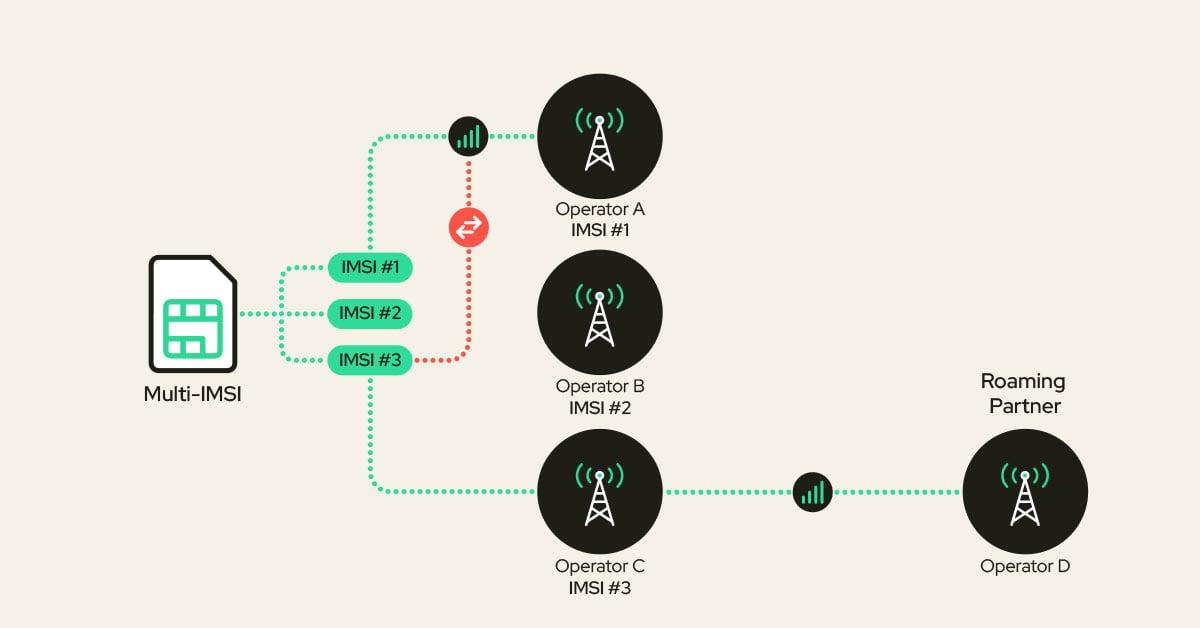
ISIMConnect’s Multi-IMSI SIM stores multiple pre-loaded network operator profiles on a single SIM, available as both plastic SIM and eSIM. Instead of being locked to one carrier, the SIM automatically switches between profiles based on signal strength, location, or network availability — giving IoT devices reliable connectivity across regions and operators without manual reconfiguration or physical SIM swaps.
Available Form Factors
Multi-IMSI Plastic SIM : Devices with a physical SIM slot needing multi-network coverage from day one
Multi-IMSI eSIM : Compact or embedded devices, manufacturing at scale where a removable SIM isn’t practical
How Multi-IMSI Switching Works
Multiple IMSI (International Mobile Subscriber Identity) profiles are loaded onto the SIM at the time of manufacture or personalization. When the device powers on or moves to a new location, the SIM evaluates available local networks and switches to the IMSI profile offering the best connection — without requiring any action from the device’s user or operator.
This differs from a standard single-operator SIM, which can only ever connect to the network tied to its single IMSI, and from SGP.32 eSIM, where profiles are managed remotely over the air after deployment rather than pre-loaded at manufacture.
Key Features of Multi IMSI M2M SIM
Multiple Operator Profiles in a single M2M SIM card
Automatic Network Switching across different mobile operator networks
Improved Signal Stability and enhanced SIM network performance
Global and Domestic Roaming support
Remote SIM management and OTA profile updates
Support for multiple SIM operator identities
Compatible with physical SIM and embedded SIM deployments
Easy migration from SIM to eSIM
Enterprise-grade eSIM provider capabilities
Real-time connectivity optimization based on network availability
High network uptime for mission-critical IoT and M2M applications
Secure authentication and encrypted data communication
Centralized SIM lifecycle and subscription management
Flexible connectivity across Airtel, Jio, BSNL, and Vodafone Idea networks
Reduced operational costs by minimizing connectivity disruptions
Enhanced coverage in remote, rural, and challenging environments
Scalable deployment support for thousands of connected devices
Seamless integration with IoT platforms, telematics, and enterprise systems
Reliable connectivity for smart meters, POS machines, ATMs, CCTV systems, and fleet management solutions
Future-ready architecture supporting digital transformation and next-generation IoT ecosystems
Simplified device provisioning and activation processes
Better roaming performance for cross-border asset tracking and global IoT deployments
Optimized connectivity management through intelligent network selection algorithms
Long-term support for industrial, automotive, logistics, healthcare, and smart city applications.
Technical Capabilities
Our Multi IMSI SIM application platform supports:
2G / 3G / 4G connectivity
Secure IMSI and operator profile storage
Over-the-air profile switching
Remote provisioning for eSIM solutions
Support for Airtel M2M, Jio, BSNL, and Vodafone operator integrations
Advanced network SIM card optimization
eUICC-enabled embedded SIM technology
The platform also supports modern enterprise use cases such as:
Airtel M2M SIM card deployments
BSNL eSIM provisioning
eSIM Jio compatibility
Airtel SIM to eSIM migration workflows
Key Benefits
Continuous connectivity across multiple regions without manual network switching
Reduced roaming dependency — the SIM connects to local network operators directly where supported
Built-in redundancy: if one network operator experiences an outage, the SIM can switch to another
Single SKU for multi-country deployments, simplifying device manufacturing and logistics
SAS-accredited SIM personalization under GSMA security protocols
Businesses evaluating the difference between SIM and eSIM can benefit from Multi IMSI architecture by combining traditional SIM reliability with modern remote provisioning capabilities.
Common Use Cases
Cross-border logistics and supply chain tracking
Fleet and vehicle tracking spanning multiple regions or countries
Smart metering and utilities deployed across varied network coverage areas
Industrial IoT sensors in remote or border-adjacent locations
Frequently Asked Questions
Q: What’s the difference between Multi-IMSI SIM and SGP.32 eSIM?
A: Multi-IMSI SIM stores multiple network profiles at manufacture time and switches between them automatically based on signal or location. SGP.32 eSIM uses GSMA’s remote provisioning standard, allowing network profiles to be downloaded, activated, or changed over the air after the device is already deployed — offering more long-term flexibility but requiring active remote management infrastructure.
Q: Is Multi-IMSI SIM available as both a physical SIM and an eSIM?
A: Yes. ISIMConnect offers Multi-IMSI in both plastic SIM and eSIM form factors, depending on your device’s design requirements.
Q: How many network profiles can a Multi-IMSI SIM hold?
A: Multi-IMSI SIMs typically hold several pre-loaded operator profiles (commonly in the range of 3–10), allowing automatic switching between them based on coverage and signal strength in a given location.
Q: Can the network profiles on a Multi-IMSI SIM be updated after deployment?
A: Multi-IMSI profiles are generally fixed at manufacture and personalization. For deployments that need post-deployment, over-the-air profile updates, SGP.32 eSIM is the better fit.
Q: Who should use Multi-IMSI SIM instead of a single-operator SIM?
A: Businesses deploying IoT devices across multiple countries or regions with inconsistent single-carrier coverage — such as cross-border logistics, international fleet tracking, or globally distributed sensor networks — benefit most from Multi-IMSI over a single-operator SIM.