
SIM Based Tracking — Network-Based Device Location API for IoT and Fleet Management
Overview
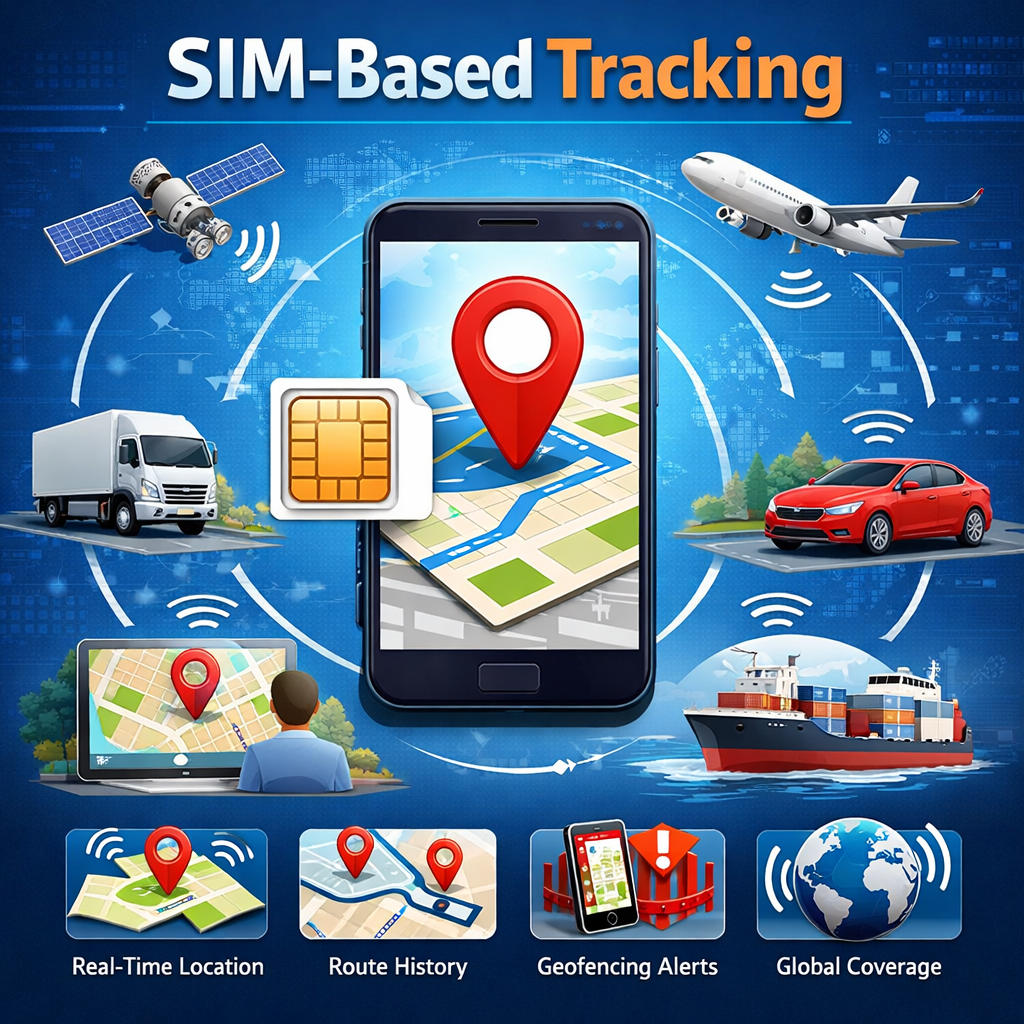
ISIMConnect’s SIM Based Tracking API provides device location data using mobile network cell triangulation rather than GPS — retrieving the approximate geographic location of any ISIMConnect SIM-enabled device from the operator’s network without requiring GPS hardware or a GPS lock. It is available across Airtel, Jio, Vodafone, and BSNL networks, and is used for fleet tracking, asset monitoring, and IoT device management where GPS is unavailable, cost-prohibitive, or as a fallback to GPS.
How SIM Based Tracking Works
The device’s SIM is connected to one or more cell towers on the operator’s network
ISIMConnect’s SIM Tracking API queries the operator’s network (via HLR/network API) for the cell tower(s) the SIM is registered to
The API returns the cell ID, location area code (LAC), and operator — identifying the cell coverage area the device is currently in
Cell tower coordinates are resolved to a geographic location — the device is placed within that cell’s coverage radius
Multiple cell triangulation (where supported by the operator) narrows the location estimate
Key Features of SIM Based Tracking
Mobile Network-Based Tracking
Uses the mobile service provider’s tower infrastructure for location monitoring.
Real-Time Device Visibility
Provides periodic or live updates using a mobile SIM card and cellular connectivity.
No Additional GPS Hardware
A simple SIM setup reduces installation complexity and maintenance cost.
Supports Multiple Operators
Compatible with:
Airtel M2M
Vodafone Connect
Jio SIM
BSNL SIM
Web-Based Dashboard
Monitor devices, vehicles, and assets remotely from a centralized dashboard.
Scalable for Large Deployments
Suitable for enterprise IoT deployments using Airtel M2M SIM card solutions and industrial connectivity platforms.
Benefits of SIM Based Tracking for Businesses
Lower Hardware Cost
A SIM mobile tracking setup reduces dependency on expensive GPS hardware.
Easy Installation
Devices only require a network SIM card and active connectivity.
Better Indoor Reliability
Unlike satellite tracking, SIM-based systems perform well indoors and underground.
Wide Coverage
Works wherever a mobile service network is available.
Backup Tracking Solution
Many businesses combine GPS with a GPS tracking SIM for improved redundancy and reliability.
Flexible Connectivity
Supports multiple telecom providers including:
Airtel SIM
Vodafone SIM
BSNL SIM card
Jio SIM card
Industries Using SIM Based Tracking
Logistics & Transport
Track fleet movement using a GPS tracking SIM card and cellular connectivity.
Asset Monitoring
Monitor valuable equipment and field assets using M2M SIM technology.
Delivery Services
Enable live delivery tracking with a SIM provider network solution.
Banking & Financial Devices
Track ATMs, POS terminals, and banking devices through secure mobile services connectivity.
Rental Equipment
Monitor the location of leased machinery and industrial equipment.
Security & Surveillance
Use phone location and device monitoring systems for remote security management.
Common Use Cases
Non-GPS IoT asset tracking: Track the location of assets (containers, equipment, infrastructure) fitted with IoT SIMs but no GPS chip
Indoor location awareness: Monitor approximate location of devices in warehouses, factories, or buildings where GPS doesn’t penetrate
GPS fallback: Supplement GPS tracking with SIM-based location when GPS signal is lost (tunnels, parking structures, urban canyons)
Fleet management: Track vehicles equipped with ISIMConnect SIMs without requiring separate GPS hardware
Stolen device recovery: Approximate location of devices where GPS may have been disabled or removed
Low-power sensor location: Confirm field location of battery-powered sensors that cannot sustain continuous GPS operation
Why Businesses Choose SIM Based Tracking
Businesses prefer SIM tracking because it is affordable, easy to deploy, and scalable. A GPS SIM card or mobile SIM can be installed quickly without advanced hardware integration. It also supports future-ready technologies such as SIM to eSIM migration and iSIM card solutions for compact IoT devices.
From transportation and logistics to banking and industrial automation, SIM-based tracking provides a practical and efficient method for real-time device visibility using existing cellular infrastructure.
Frequently Asked Questions
Q: What is SIM-based tracking?
A: SIM-based tracking retrieves a device’s approximate geographic location using mobile network cell tower data from the operator — without GPS hardware in the device. ISIMConnect’s SIM Tracking API queries the operator’s network to identify which cell tower(s) an ISIMConnect SIM is registered to, and converts that to a geographic location estimate.
Q: How accurate is SIM-based tracking compared to GPS?
A: SIM-based tracking is approximate — accuracy ranges from around 100 metres in dense urban areas (many overlapping small cells) to several kilometres in rural areas (large cell coverage zones). GPS is significantly more accurate (3–10m). SIM tracking is best used for assets where approximate location is sufficient, or as a GPS fallback.
Q: Do I need any additional hardware for SIM-based tracking?
A: No. SIM-based tracking uses the SIM card already in the device — no additional GPS chip, antenna, or hardware is required. This makes it suitable for low-cost IoT devices or existing deployments where adding GPS hardware is not practical.