eIM — eSIM IoT Remote Manager for SGP.32 Profile Management
Overview
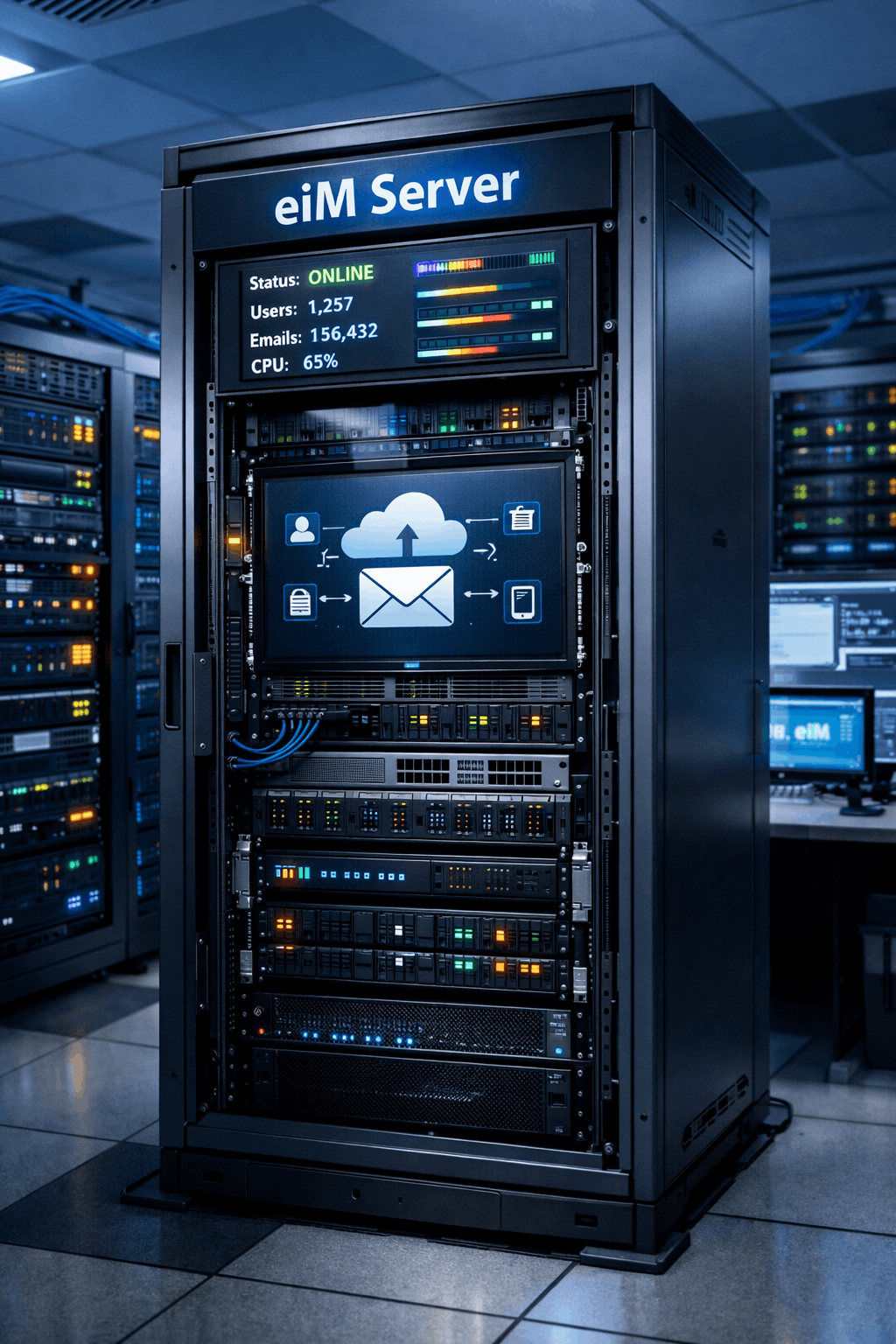
ISIMConnect’s eIM (eSIM IoT Remote Manager) is the orchestration server that manages the complete lifecycle of eSIM profiles across IoT device fleets — downloading, activating, switching, suspending, and deleting operator profiles remotely, without any physical access to devices. It is a required component of any GSMA SGP.32 remote provisioning deployment, sitting between the operator’s profile infrastructure (SM-DP+) and the IoT devices in the field. ISIMConnect provides eIM as a managed platform — accessible via API and Connection Management Platform — so enterprises do not need to build or host their own eIM infrastructure.
What Is eIM, and Where Does It Fit in the SGP.32 Architecture?
GSMA SGP.32 introduced a new remote provisioning architecture specifically for IoT devices — headless, low-power, and intermittently connected. The eIM is the central orchestration component in this architecture.
The eIM sits between the operator’s SM-DP+ and the IPA on each device, coordinating the right profile to the right device at the right time — without requiring user interaction, without requiring the device to be online at the exact moment of provisioning, and without requiring point-to-point integrations between the enterprise and each individual operator.
How eIM Differs From the Consumer eSIM Architecture (LPA)
In the consumer eSIM standard (SGP.22 — used in phones and tablets), profile management is handled by the LPA (Local Profile Assistant), which runs on the device and requires a user to interact with it — opening a settings menu, scanning a QR code, or confirming an installation.
IoT devices have no user interface and are often battery-powered, low-data, or deployed in remote locations. GSMA SGP.32 solved this by splitting the LPA into two components:
The IPA (IoT Profile Assistant) — the device-side component that handles the device’s side of the provisioning handshake
The eIM — the server-side component that replaces “user intent,” allowing fleet managers or enterprise systems to trigger profile operations remotely without any on-device user interaction
This is what makes eIM fundamentally different from anything in the consumer eSIM world — it is the server-side replacement for human user action at the device.
What ISIMConnect’s eIM Platform Manages
ISIMConnect’s eIM provides full SGP.32-compliant profile lifecycle management across your device fleet:
Profile Download – Pushes operator profiles from SM-DP+ to target devices over the air
Profile Enable – Activates a downloaded profile — switches the device to that operator
Profile Disable – Suspends an active profile without deleting it
Profile Delete – Removes a profile from the device permanently
Asynchronous Queuing – Queues operations for offline devices — executes on next connection
Fleet Operations – Applies profile actions to groups filtered by region, device type, or network status
REST API Access – Integrates eIM operations into enterprise platforms and device management systems
Connection Management – Centralized dashboard for real-time profile state and connectivity status across the fleet
Key Capabilities
Asynchronous operation: eIM does not require a device to be online when a profile operation is triggered. Operations queue server-side and execute the next time the device connects — critical for battery-powered, NB-IoT, and LPWAN devices that connect infrequently.
No user interaction required: Profile downloads, switches, and lifecycle events are all initiated server-side through the eIM — no QR codes, no settings menus, no technician visits.
Fleet-scale management: Apply profile operations to individual devices or thousands simultaneously, filtered by geography, device type, operator, or connectivity status.
REST API integration: ISIMConnect’s eIM is accessible via REST API, allowing enterprises to integrate profile lifecycle management directly into their own device management platforms, ERP systems, or operations dashboards.
Operator-agnostic orchestration: The eIM coordinates between your devices and any supported operator’s SM-DP+ — Airtel, Jio, Vodafone, BSNL in India, plus global operators — without requiring separate integrations per carrier.
Who Uses ISIMConnect’s eIM
IoT device manufacturers integrating SGP.32 eSIM into new hardware designs who need managed provisioning infrastructure without building their own eIM
Enterprise IoT operators managing deployed device fleets across multiple operator regions who need centralized profile control via API
MVNOs and connectivity providers offering SGP.32-based connectivity services to their own customers who need a compliant eIM layer
System integrators deploying SGP.32-based solutions for end clients who need full provisioning infrastructure included in the engagement
Common Use Cases
Remote operator switching for IoT fleets expanding into new geographic regions without physical device access
Centralized lifecycle management for smart meter networks requiring long-term operator contract management
Fleet telematics profile updates during multi-country logistics route changes
EV charging network operator switching as commercial agreements evolve
Industrial IoT redeployment — reassigning devices from one region’s operator to another without physical retrieval
Healthcare IoT device management requiring auditable, compliant SIM lifecycle records
Frequently Asked Questions
Q: What is eIM and what does it do?
A: eIM (eSIM IoT Remote Manager) is the server-side orchestration component in the GSMA SGP.32 architecture. It manages the complete lifecycle of eSIM profiles across IoT device fleets — downloading, activating, switching, suspending, and deleting operator profiles remotely, without physical access to devices or user interaction.
Q: Do I need an eIM to use SGP.32 SIM?
A: Yes. SGP.32 profile management requires an eIM. Without one, there is no mechanism to push profile downloads or lifecycle operations to SGP.32-capable devices. ISIMConnect provides eIM as a fully managed platform so enterprises do not need to build or host their own.
Q: What is the difference between eIM and SM-DP+?
A: eIM is the orchestration layer — it decides when to push a profile and to which device. SM-DP+ is the storage and delivery layer — it holds encrypted operator profile data and delivers it to the device’s eUICC. Both are required for SGP.32 provisioning. ISIMConnect manages the eIM and coordinates with operator SM-DP+ infrastructure on your behalf.
Q: What is the difference between eIM and LPA used in consumer eSIM?
A: In consumer eSIM (SGP.22), the LPA runs on the device and requires a user to initiate profile operations. eIM replaces this user interaction server-side for IoT devices with no user interface, allowing fleet managers to trigger profile operations remotely across thousands of headless devices simultaneously.
Q: Does ISIMConnect’s eIM support asynchronous profile delivery?
A: Yes. Operations triggered through the eIM queue server-side if a device is offline and execute the next time the device connects — essential for battery-powered, NB-IoT, and LPWAN devices that connect infrequently.
Q: Can I integrate ISIMConnect’s eIM with my own device management platform?
A: Yes. ISIMConnect’s eIM is accessible via REST API, allowing profile lifecycle operations — downloads, activations, switches, and deletions — to be triggered directly from enterprise platforms or device management systems.
Q: Which network operators does ISIMConnect’s eIM support?
A: Airtel, Jio, Vodafone Idea, and BSNL for Indian deployments, with global operator support for cross-border IoT deployments through ISIMConnect’s roaming and SM-DP+ partnerships.