
Introduction
The telecommunications industry is rapidly moving toward digital connectivity, and one of the biggest innovations driving this change is the eSIM. Unlike traditional physical SIM cards, an eSIM is embedded directly into a device, allowing users to activate mobile plans digitally without inserting or replacing a plastic SIM card.
Today, major telecom operators including Airtel eSIM, Jio eSIM, Vodafone eSIM (Vi eSIM), and BSNL eSIM are making it easier for users to switch networks, activate services remotely, and manage multiple mobile profiles on a single device.
In this guide, you’ll learn what an eSIM is, how it works, how eSIM activation is performed, the role of the eSIM QR code, eSIM benefits, and the growing list of eSIM phones in India.
What Is an eSIM?
An eSIM (Embedded Subscriber Identity Module) is a digital SIM technology built directly into a smartphone, smartwatch, tablet, laptop, IoT device, or connected vehicle.
Unlike a traditional SIM card that must be physically inserted into a device, an eSIM is permanently embedded into the hardware during manufacturing. Mobile network profiles can be downloaded remotely through secure provisioning systems.
This means users can activate a network connection, switch operators, or add a new mobile plan without visiting a store or handling a physical SIM card.
Key Features of eSIM
No physical SIM card required
Remote activation through software
Supports multiple operator profiles
Easy network switching
Enhanced security
Reduced device space requirements
Ideal for smartphones, IoT devices, wearables, and laptops
How Does an eSIM Work?
An eSIM works by securely storing digital operator profiles inside a built-in chip.
The process typically follows these steps:
1. Device Contains an Embedded eSIM Chip
The manufacturer installs an eSIM chip directly onto the device motherboard.
2. User Requests an eSIM Plan
A customer subscribes to a mobile service from operators such as: Airtel eSIM Jio eSIM Vodafone eSIM (Vi) BSNL eSIM
3. Operator Generates an eSIM QR Code
The mobile operator creates a unique eSIM QR code containing encrypted activation information.
4. User Scans the eSIM QR
The device camera scans the eSIM QR code, and the mobile profile is downloaded securely.
5. eSIM Activation Completes
After verification, the profile becomes active and the device connects to the network.
This process is known as eSIM activation and usually takes only a few minutes.
What Is an eSIM QR Code?
An eSIM QR code is a secure digital code generated by a mobile operator to provision a subscriber profile onto an eSIM-enabled device.
The QR code contains:
Operator information
Network credentials
Subscriber profile details
Security certificates
When users scan the eSIM QR, the device automatically downloads the mobile subscription profile.
This eliminates the need for traditional SIM card insertion and manual configuration.
eSIM Activation Process in India
The exact process varies by operator, but most providers follow a similar workflow.
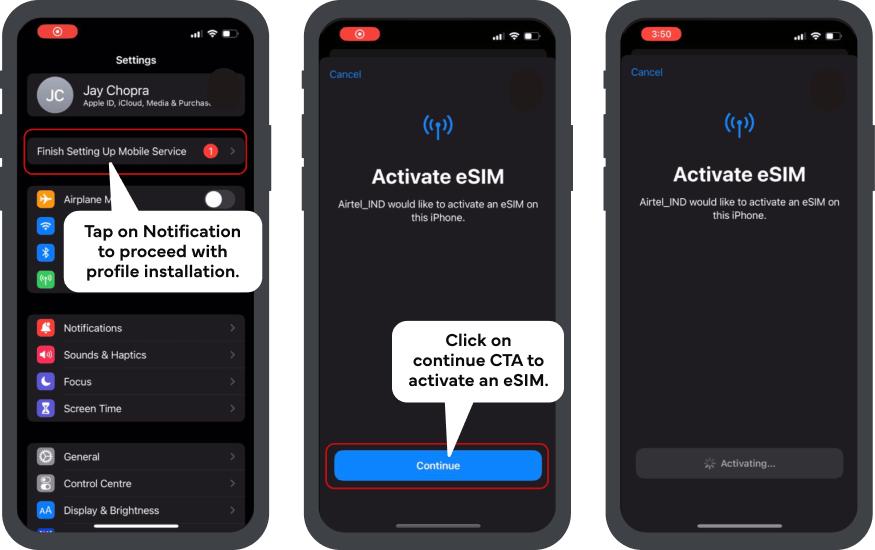
eSIM Activation Airtel
For eSIM Airtel, users typically:
Request eSIM conversion.
Receive activation instructions.
Obtain an eSIM QR code.
Scan the QR code.
Confirm activation.
Restart the device.
eSIM Jio
For eSIM Jio, customers can:
Request activation through authorized channels.
Receive a QR code.
Download the eSIM profile.
Complete verification.
eSIM Vodafone (Vi)
eSIM Vodafone users follow a similar process involving:
Registration
Profile generation
QR code delivery
Device activation
eSIM BSNL
As eSIM BSNL services continue to expand, eligible users can activate supported devices through BSNL’s eSIM provisioning system where available.
eSIM Benefits
The popularity of eSIM technology is growing because of its numerous advantages.
1. Instant Connectivity
Users can activate mobile plans remotely without visiting a store.
2. No Physical SIM Card
There is no need to handle plastic SIM cards or SIM trays.
3. Better Security
Since the eSIM is embedded inside the device, it cannot be easily removed if a phone is lost or stolen.
4. Multiple Profiles
Many devices allow users to store multiple operator profiles simultaneously.
5. Easier International Travel
Travelers can download local operator profiles instantly without buying physical SIM cards.
6. Improved Device Design
Removing the SIM tray frees up space for:
Larger batteries
Additional sensors
Better waterproofing
7. Eco-Friendly Technology
eSIM reduces plastic waste and packaging associated with traditional SIM cards.
These advantages make eSIM benefits highly attractive for both consumers and enterprises.
eSIM Phones in India
The number of eSIM phones in India continues to grow each year.
Popular eSIM mobiles in India include:
Apple iPhones
iPhone 16 Series
iPhone 15 Series
iPhone 14 Series
iPhone 13 Series
iPhone 12 Series
iPhone 11 Series
iPhone XS and newer
Samsung Devices
Galaxy S24 Series
Galaxy S25 Series
Galaxy Z Fold Series
Galaxy Z Flip Series
Google Devices
Pixel 9 Series
Pixel 8 Series
Pixel 7 Series
Pixel 6 Series
Other Brands
Motorola premium models
Select Oppo devices
Select Vivo devices
Select Xiaomi flagship devices
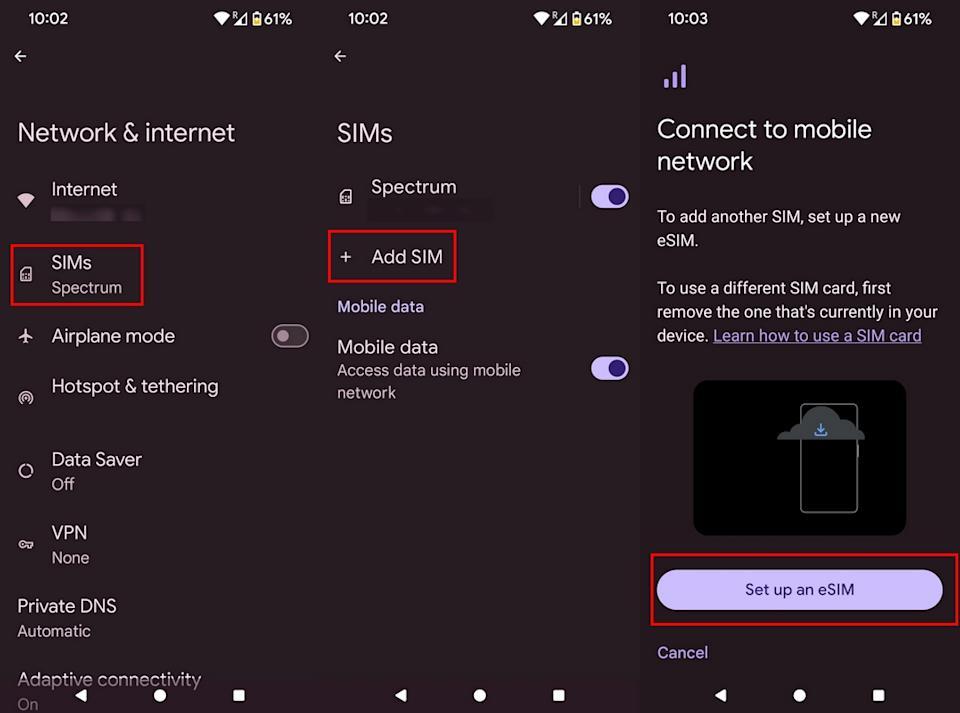
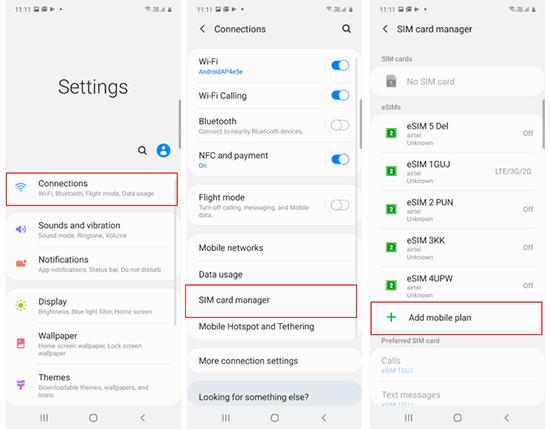
Before activating a digital SIM, users should verify whether their device is an eSIM support mobile.
How to Check Whether Your Device Supports eSIM
You can verify eSIM compatibility by:
Android
Open Settings
Go to SIM Manager or Mobile Network Look for “Add eSIM” option
iPhone
Settings
Cellular
Add eSIM
If these options are visible, your device likely supports eSIM technology.
Why eSIM Is Important for the Future
The future of connectivity is moving toward software-defined mobile networks.
eSIM technology supports:
5G connectivity
IoT deployments
Smart vehicles
Wearable devices
Enterprise mobility
International roaming solutions
Connected industrial equipment
As adoption increases, telecom providers across India and globally are expected to expand eSIM support and simplify activation processes.
Conclusion
eSIM technology is transforming the way mobile devices connect to cellular networks. By eliminating the need for physical SIM cards, eSIM provides greater flexibility, enhanced security, easier operator switching, and faster activation.
Whether you’re looking for eSIM Airtel, eSIM Jio, eSIM Vodafone, eSIM BSNL, an eSIM QR code, or information about eSIM phones in India, understanding how this technology works can help you make better connectivity decisions.
As more eSIM mobiles in India enter the market and telecom operators continue expanding support, eSIM is set to become the standard for future mobile and IoT connectivity.
Leave a Reply